Frequency Adverbs

Frequency adverbs are words that describe how often something happens. They are commonly used in English to express the frequency of an action or event. An English worksheet that focuses on frequency adverbs can help students improve their understanding and usage of these adverbs.

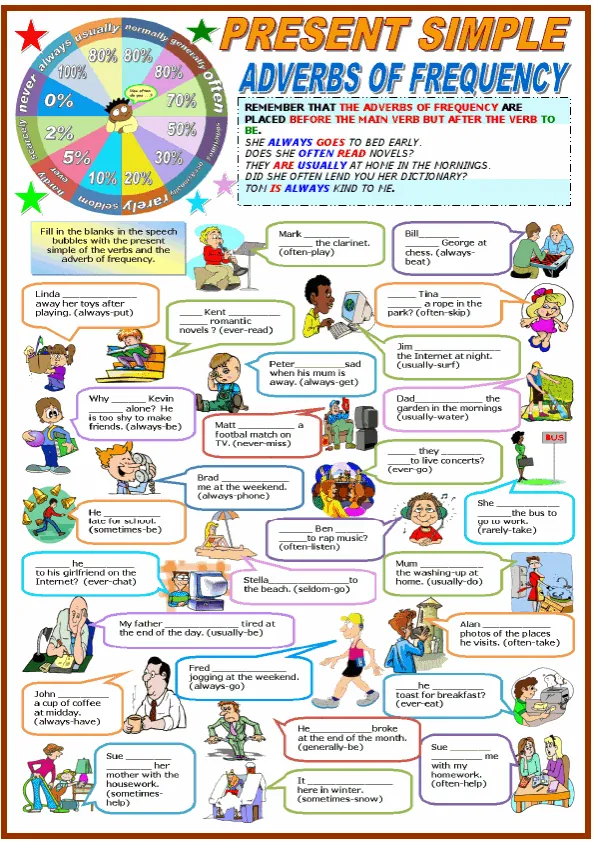
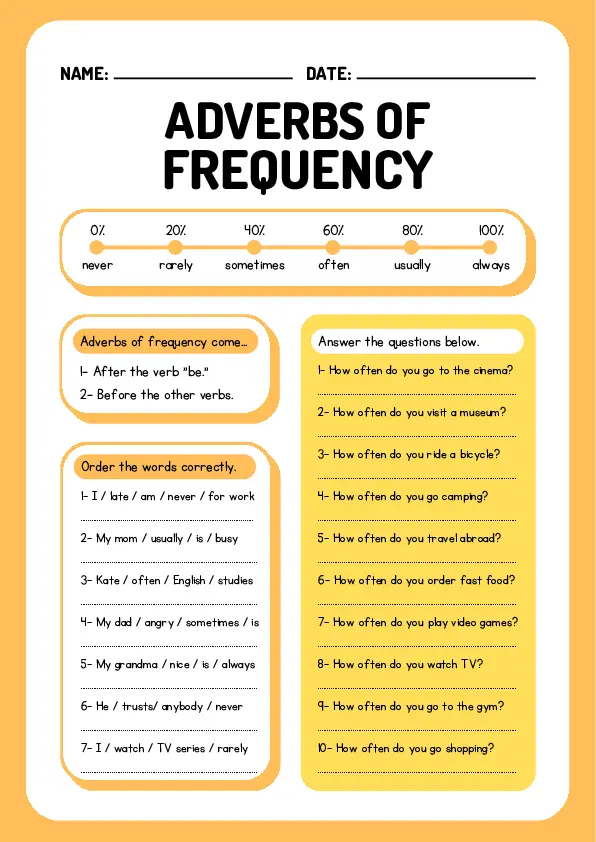
A typical frequency adverb worksheet may include exercises such as matching, fill in the blanks, or sentence completion. For example, students may be asked to match frequency adverbs like "always," "usually," and "rarely" with their corresponding frequencies, such as "100% of the time," "50% of the time," and "less than 10% of the time."

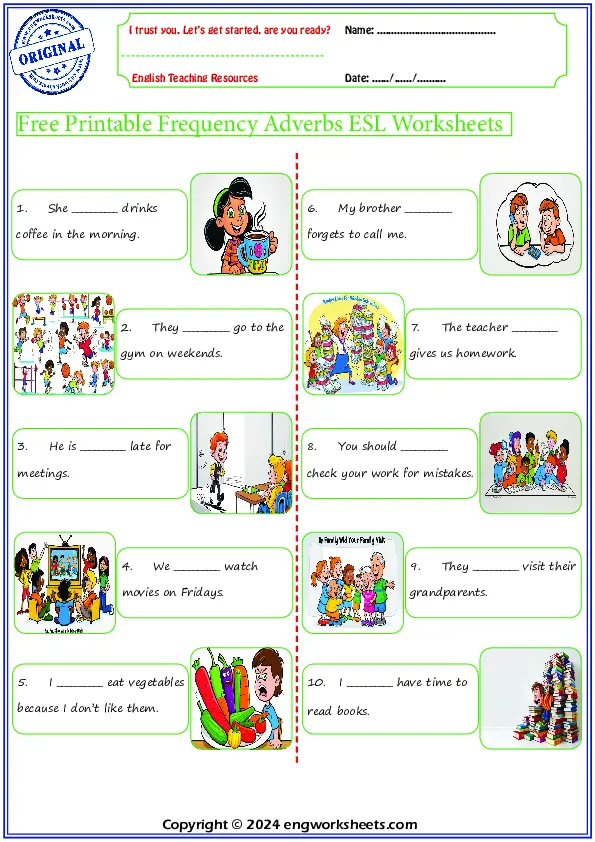
Another common exercise on a frequency adverb worksheet is to complete sentences using the correct frequency adverb. This helps students practice using the adverbs in context and gain a better understanding of how they can be used to describe different levels of frequency.

Frequency adverb worksheets can be used in both ESL and native English-speaking classrooms. They are especially useful for ESL learners who may struggle with understanding the nuances of frequency in English. By practicing with frequency adverb worksheets, students can improve their communication skills and become more confident in their ability to express themselves in English.

Overall, frequency adverb worksheets are a valuable tool for improving English language skills. They provide a structured approach to learning and practicing frequency adverbs, which can help students to become more proficient in English communication.

4 items found.

Free Printable Frequency Adverbs ESL Worksheets

Mastering Frequency Adverbs: Boost Your English Precision Frequency adverbs clarify how often actions occur, enhancing clarity in communication. Common examples include always, usually, often, sometimes, rarely, and never. These adverbs help answer "How often?" and refine sentence meaning. Placement Rules Frequency adverbs typically sit before the main verb (e.g., She always arrives early) but after the verb "to be" (e.g., He is never late). Exceptions like sometimes or usually can start or end sentences for emphasis (e.g., Sometimes, I work remotely). Why They Matter Misplacing these adverbs can confuse timelines. For instance, "I often don’t eat sushi" vs. "I don’t often eat sushi" subtly shift emphasis. Pro Tip Pair frequency adverbs with time expressions (e.g., every day, twice a week) for richer context. Practice structuring sentences to sound natural and precise. By mastering frequency adverbs, you’ll convey habits and routines accurately—key for fluent English. Start integrating them today! Keywords: frequency adverbs, English grammar, how often, adverb placement, improve English.
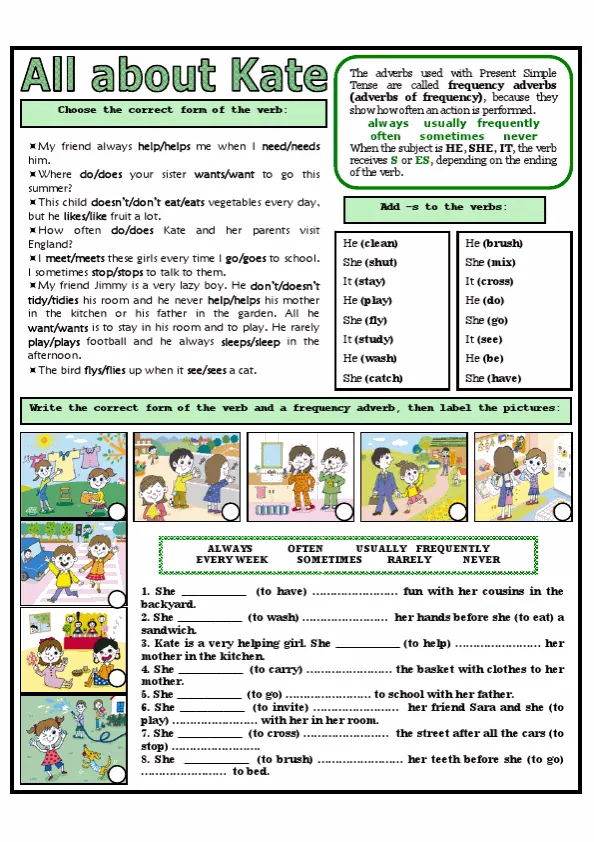
Level: Elementary Age: 9-11